
If you manage a restaurant, commercial kitchen, or a property with food service, you’ve probably had someone reach out and say, “We need to have our kitchen suppression system inspected.”
And chances are, the system they’re talking about is an ANSUL system.
ANSUL is actually a brand of commercial kitchen fire suppression system, but it has become one of the most recognized names in kitchen suppression. In fact, ANSUL systems make up roughly 85% of the kitchen suppression systems AAA Fire Protection services.
While ANSUL is common, it isn’t the only system we work on. Our suppression team also services Amerex, Buckeye, Badger, Pyro-Chem, Lehavot, and other commercial kitchen suppression systems.
Regardless of the manufacturer, these systems require regular inspection and maintenance to help make sure they’re ready to operate when needed.
What Does a Commercial Kitchen Suppression System Do?
Commercial kitchens have some unique fire hazards. Fryers, ranges, griddles, cooking oils, grease buildup, and high temperatures can allow a fire to grow quickly.
ANSUL and other commercial kitchen suppression systems are specifically designed for these environments.
When a system detects a fire, it can automatically discharge a wet chemical suppression agent over the protected cooking equipment. The system is designed to suppress the fire and help prevent it from reigniting.
Depending on the installation, activation may also shut down fuel or electrical power to cooking equipment and send a signal to the building’s fire alarm system.
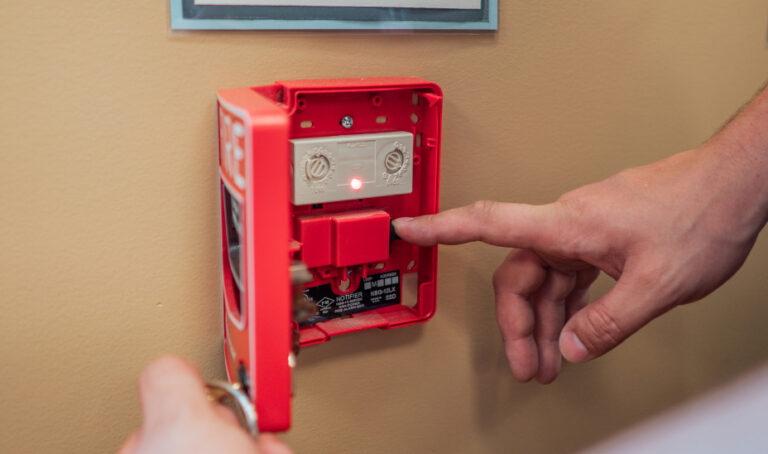
There is also typically a manual pull station that allows the system to be activated manually during an emergency.
There’s a lot happening behind the scenes, which is exactly why regular service matters.
How Often Does an ANSUL System Need Service?
ANSUL and other commercial kitchen suppression systems typically receive semiannual inspection and maintenance.
During this service, a qualified technician evaluates the system and its components to help make sure the system is properly maintained and ready to operate as designed.
For restaurant operators, property managers, and facility teams, staying on top of those service dates is important. The last thing you want is to discover overdue maintenance when you’re already dealing with another inspection, an equipment change, or an issue with the system.
And if you manage multiple restaurants or properties, keeping track of service across every location can quickly become another thing on an already long list.
SCHEDULE KITCHEN SUPPRESSION SERVICE HERE
What Happens During an ANSUL System Inspection?
There’s more involved in an ANSUL system inspection than looking at the tag and changing the date.
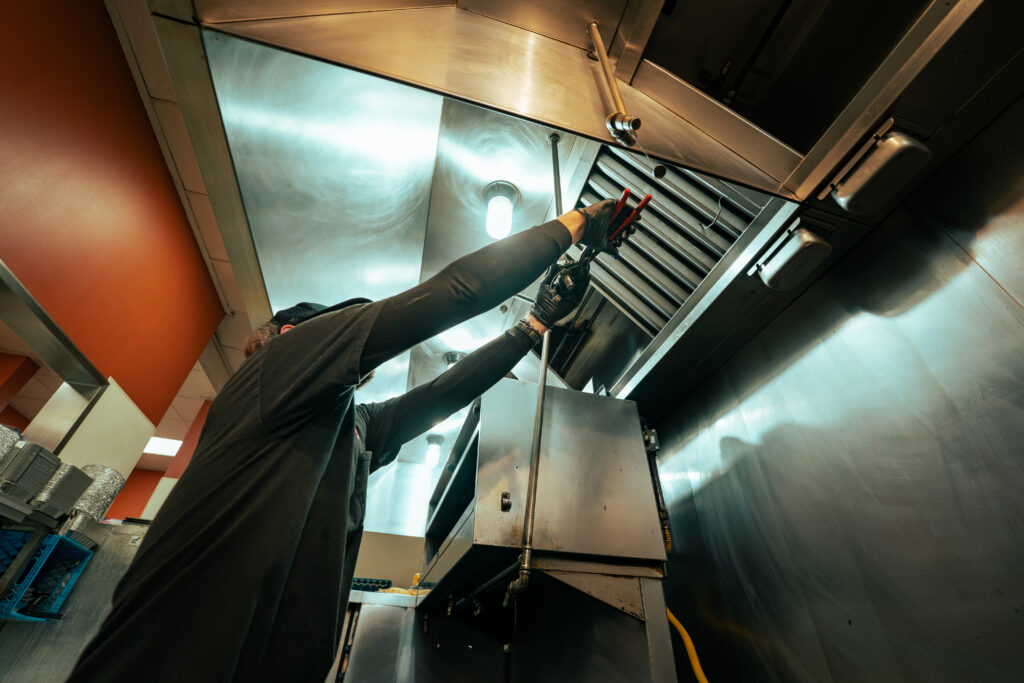
During semiannual service, a qualified suppression technician evaluates the system and its components. Depending on the system and installation, that may include checking:
- Nozzles and nozzle caps
- Detection components
- Fusible links
- Manual pull stations
- Suppression agent containers
- Piping and distribution components
- System controls and mechanical components
- Fuel or electrical shutoffs
- Connections or interfaces with the fire alarm system
- The condition and placement of protected cooking equipment
The technician is also paying attention to the kitchen itself, because kitchens change.
Did You Move or Replace Kitchen Equipment?
A fryer gets replaced. A new appliance gets added. A griddle moves because the kitchen staff found a better way to set up the line.
Those changes may seem minor, but they can matter when it comes to your fire suppression system.
Kitchen suppression systems are designed around the equipment and hazards they’re intended to protect. If appliances have been moved, replaced, or added, the existing nozzle placement or system configuration may need to be evaluated.
That doesn’t necessarily mean you need an entirely new system. It does mean it’s worth having a qualified suppression professional take a look.
Whenever possible, involve your fire protection provider before making significant changes to the cooking line. It’s much easier to address potential issues beforehand than discover them after the equipment has already been moved or installed.
What Happens If We Find a Deficiency?
A deficiency doesn’t automatically mean you’re looking at a major repair.
Sometimes the solution is relatively straightforward. Other findings may require replacement components, additional service, or modifications to the system.
What’s important is understanding what was found, why it matters, and what needs to happen next.
At AAA Fire Protection, our goal isn’t simply to perform an inspection, hand you paperwork, and leave. We want our customers to understand the condition of their systems and have a clear path for addressing deficiencies when they come up.
Fire Protection Service Shouldn’t Disrupt Your Business
There’s another part of fire protection maintenance that doesn’t get talked about enough: your time.
Restaurants and commercial kitchens make money when they’re operating. Having equipment unavailable for maintenance can affect your schedule, your staff, and ultimately your revenue.
We understand that.
Our suppression team works with customers to schedule service around their operations whenever possible, helping minimize disruption while still getting necessary maintenance completed.
Cost matters, too.
AAA Fire Protection is a full-service fire protection company with in-house capabilities, which can help reduce the need to coordinate with multiple vendors.
For example, when suppression cylinders require hydrostatic testing, having that capability in-house can eliminate an additional middleman. That helps make the process more efficient while allowing us to keep our pricing competitive.
For restaurant operators and property managers, that means fewer vendors to coordinate, less back-and-forth, and one company helping manage more of your fire protection needs.
More Than Kitchen Suppression
Your kitchen suppression system may be only one piece of your property’s overall fire protection.
Depending on your building, you may also have fire sprinklers, fire alarms, extinguishers, emergency and exit lighting, backflow assemblies, monitoring, or other systems requiring regular inspection and maintenance.
Working with a full-service fire protection provider can make managing those requirements much easier, especially if you’re responsible for multiple properties or locations.
Fewer vendors. Less downtime. Competitive service. And a team that understands your business can’t simply stop because it’s time for fire protection maintenance.
ANSUL System Inspection & Service in Western Washington
AAA Fire Protection provides inspection, maintenance, and repair for ANSUL and other commercial kitchen fire suppression systems throughout Western Washington.
Our suppression team services ANSUL, Amerex, Buckeye, Badger, Pyro-Chem, Lehavot, and other kitchen suppression systems.
Whether you’re responsible for one restaurant or an entire portfolio of commercial properties, our team can help you stay on top of semiannual service, address deficiencies, and make your fire protection needs easier to manage.
Need an ANSUL system inspection or have questions about your commercial kitchen suppression system?
Contact AAA Fire Protection to schedule service or talk with our suppression team.