Keeping up with commercial fire protection inspections can get complicated quickly.
A commercial building may have fire sprinklers, alarms, extinguishers, emergency lighting, backflow assemblies, fire pumps, suppression systems, and other life safety equipment—and they don’t all follow the same inspection and testing schedule.
For property managers and facility teams, that can mean multiple due dates, different testing requirements, and a long list of systems to keep track of.
So, what fire protection inspections should you be planning for each year?
The answer depends on your building and the systems installed, but here are some of the most common inspections commercial properties need to stay ahead of.
Fire Sprinkler Inspection & Testing
A fire sprinkler system isn’t something you want to discover has a problem during an emergency.
Commercial sprinkler systems require inspection and testing at various intervals. Depending on the system and its components, some items may require quarterly, annual, three-year, or five-year attention.
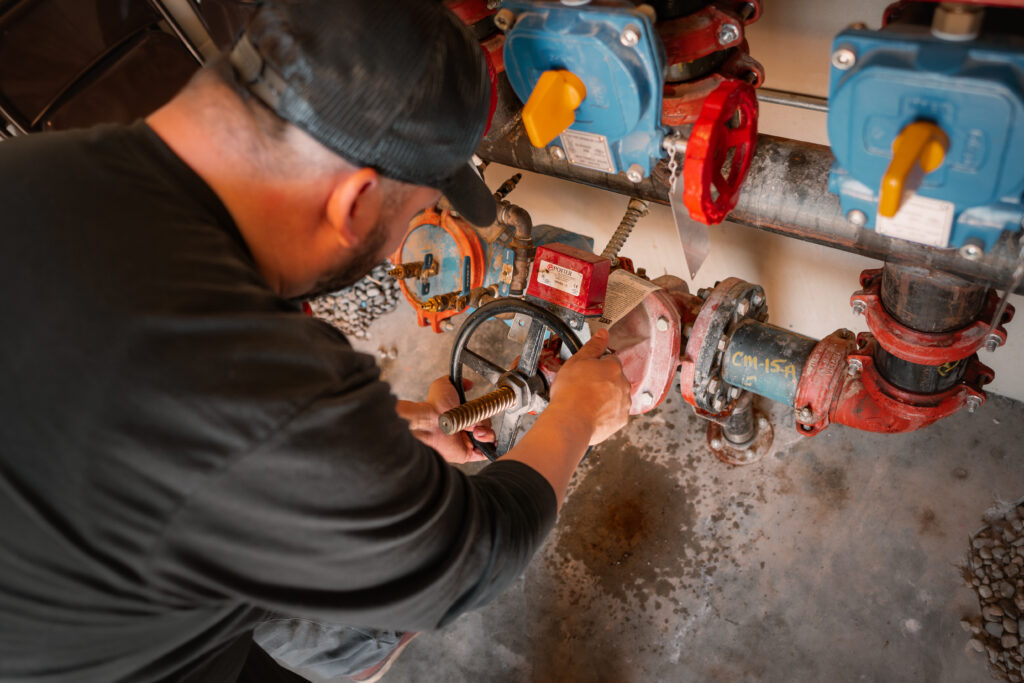
During sprinkler inspection and testing, technicians may evaluate components such as:
- Control valves
- Gauges
- Waterflow devices
- Supervisory devices
- Sprinkler heads
- Piping and visible system components
- Main drains
- Alarm devices
- Fire department connections
Additional testing may be required based on the type and age of the system.
One of the biggest mistakes we see is assuming that because the building had an “annual inspection,” every sprinkler requirement has been taken care of. Certain components have their own inspection and testing intervals.
Fire Alarm Inspection & Testing

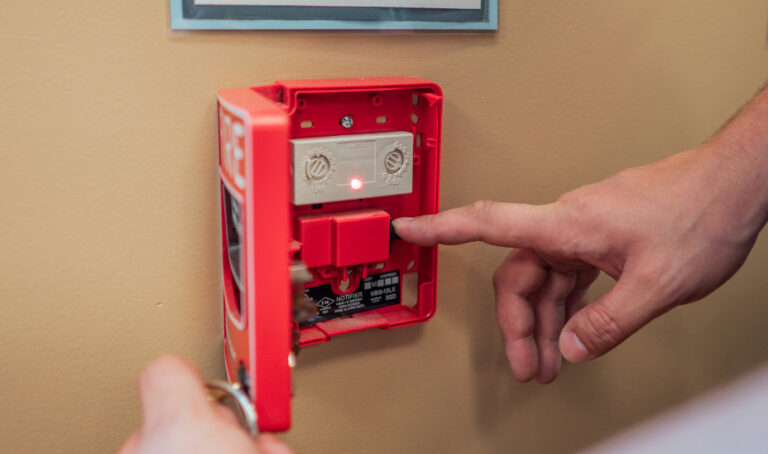
Your fire alarm system is responsible for detecting an emergency and notifying building occupants—and in many buildings, communicating with other life safety systems.
Regular fire alarm inspection and testing helps identify problems before they become larger issues.
Testing can include devices such as smoke detectors, heat detectors, pull stations, notification appliances, supervisory devices, control panels, and other connected components.
If you’ve ever seen a trouble or supervisory signal on your fire alarm panel and wondered whether it can wait, that’s exactly the type of issue that should be addressed rather than ignored until the next inspection.
Fire Extinguisher Inspections
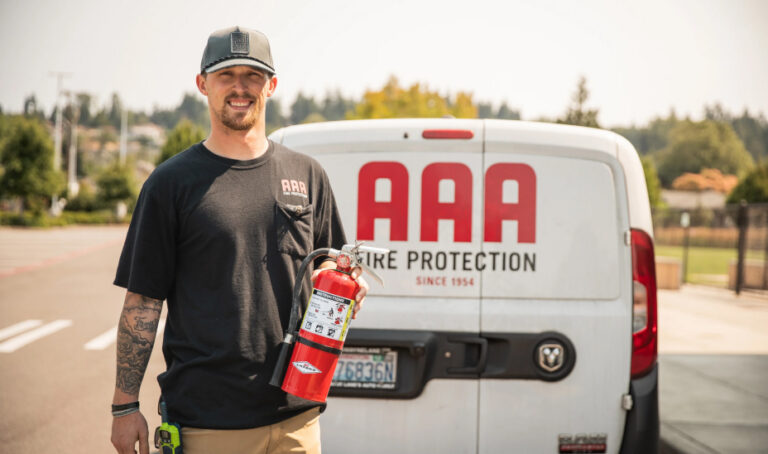
Portable fire extinguishers are one of the most visible pieces of fire protection equipment in a building, but they’re also easy to overlook.
Commercial fire extinguishers need routine inspections and periodic maintenance to make sure they’re properly located, accessible, charged, and ready for use.
Depending on the extinguisher type and age, additional maintenance such as internal examination or hydrostatic testing may also be required.
And yes—the extinguisher that’s been sitting behind a filing cabinet for the last year is a problem.
Fire Pump Inspection & Testing
If your building has a fire pump, it’s a critical part of the sprinkler system.
The fire pump is designed to provide the water pressure and flow needed for the sprinkler system to perform properly. Inspection and testing help verify that the pump will operate as intended when it’s needed.
Requirements vary depending on the type of pump and system, but fire pumps have inspection and testing requirements beyond simply looking at the equipment once a year.
Annual fire pump testing is an important part of verifying overall system performance.
Backflow Testing
Many commercial properties have backflow prevention assemblies associated with their fire sprinkler systems.
These devices help protect the public water supply from contamination and generally require regular testing by a qualified backflow assembly tester.
If your property has multiple buildings or systems, keeping track of backflow testing dates along with your other annual fire protection inspections can make compliance much easier.
Fire Suppression System Inspections
Not every fire is best protected by a traditional sprinkler system.
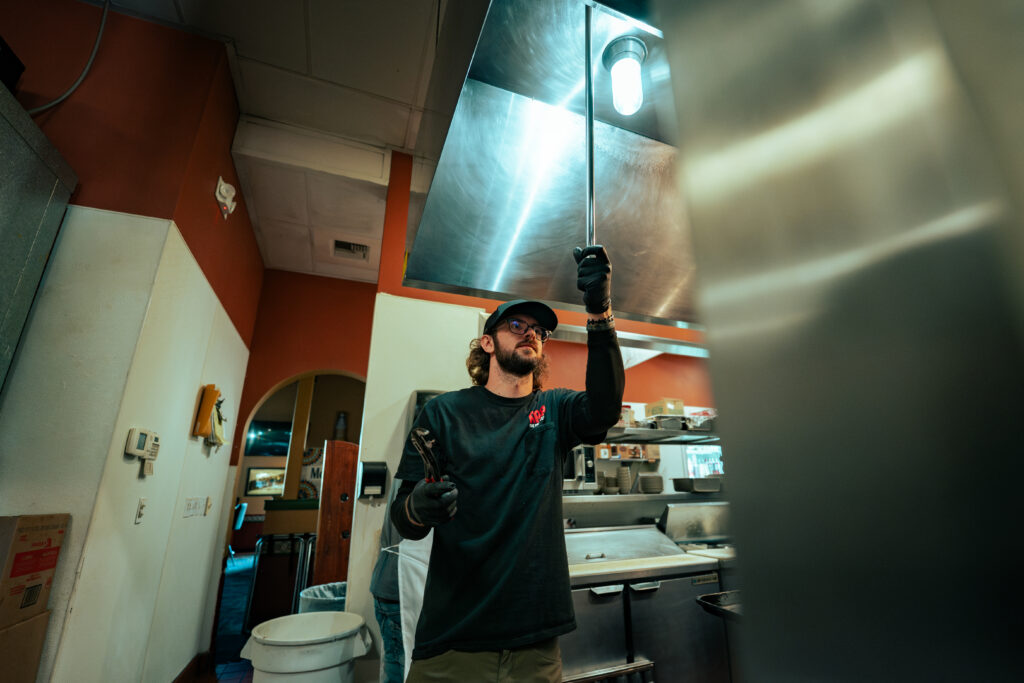
Commercial kitchens, paint booths, industrial equipment, marine applications, and other special hazards may rely on dedicated fire suppression systems.
These systems have their own inspection, testing, and maintenance requirements based on the equipment and application.
For restaurants and commercial kitchens in particular, keeping suppression system service current is an important part of maintaining a safe and compliant operation.
Emergency Lights & Exit Signs
Emergency lighting and illuminated exit signs are easy to forget because they’re part of the building you see every day.
During an emergency or power failure, though, they’re essential for helping occupants safely find their way out.
Commercial properties should have emergency lighting and exit signs inspected and tested regularly to verify that illumination, battery backup, and other required functions are working properly.
Standpipes and Other Building Systems
Larger commercial buildings, high-rises, parking structures, and certain other facilities may have additional fire protection equipment requiring inspection and testing.
That can include standpipe systems, hydrants, smoke control components, and other specialized life safety systems.
This is one reason there isn’t a universal annual fire inspection checklist that works for every property. Your inspection schedule should be based on the systems actually installed in your building.
What Happens If an Inspection Finds a Deficiency?
Finding a deficiency doesn’t automatically mean your entire fire protection system has failed.
A deficiency may be something relatively straightforward, or it may identify a condition that needs prompt attention.
The important part is understanding:
What was found? How serious is it? What needs to be repaired? And how quickly does it need to happen?
Keeping good inspection records also makes it much easier to track recurring issues, completed repairs, and upcoming testing requirements.
For property managers responsible for multiple buildings, having one fire protection provider who understands the history of each property can make this process significantly easier.
Who Can Perform Commercial Fire Protection Inspections?
Commercial fire protection inspections should be performed by qualified professionals who understand the specific systems in your building and the applicable inspection and testing requirements. For properties with multiple fire protection systems, working with a full-service provider can also simplify the process.
Instead of coordinating separate vendors for alarms, sprinklers, extinguishers, backflow testing, suppression systems, fire pumps, and emergency lighting, working with a full-service fire protection company gives you one place to manage annual inspections, testing, deficiencies, repairs, and ongoing service.
Staying ahead of commercial fire protection inspections can help reduce surprises, address deficiencies sooner, and keep your life safety systems ready when they’re needed.
At AAA Fire Protection, we inspect, test, service, repair, and install a wide range of commercial fire protection systems throughout Seattle and Western Washington.
Our goal isn’t simply to check a box once a year. It’s to help building owners, property managers, and facility teams understand what their systems need, what’s coming due, and what needs attention before a small issue turns into a bigger one.
Schedule Your Commercial Fire Protection Inspections
Not sure what’s due at your building?
AAA Fire Protection can review the fire protection systems at your property and help determine which inspections and testing apply to your facility.
Whether you manage one commercial property or an entire portfolio, staying ahead of annual fire protection inspections can help reduce surprises, address deficiencies sooner, and keep your life safety systems ready when they’re needed.
Need to schedule an inspection? Contact AAA Fire Protection to request service in Seattle or throughout Western Washington.